I'm in Poland, and yesterday did a 90 minute presentation with translator--I talked a bit then she talked, then I talked and she talked, etc.--and then was on a panel with the country's top glyphosate and Genetically Modified Organism (GMO) researcher. The other panelist was one of Poland's representatives to the EU.
She started off talking about how effective all the green legislation had been over the past 20 years. Touting toothpaste tube packaging and the circular economy as major steps forward, she was a big governmenter through and through. Of course, she said the government needed to provide safety for everyone, including food. I smelled a rat.
In typical government-speak, she said every product needed an "assessment of value cycle" displayed on the label in a single across-EU standard. Seeing this as a way to improve the marketing of products, she likened it to the current energy score on washing machines. She used washing machines more than once as an example of big labeling wins.
She admitted this was not as easy to do with food, noting that a value assessment of how a food was promoted muddied the waters, impact of transport, and other nuances were hard to capture compared to washing machine energy. Can you imagine a small farmer trying to jump through such a hoop? Get real.
Fortunately, before the moderator asked me to weigh in, the researcher-professor tore into this politician with a severity beautiful to behold. The audience rocked with applause. "The EU is completely hypocritical." She said the EU taxes small enterprises out of business and gives concessions to big ones. As for safety, she noted that in the EU's view, the more biologically active a food was, the less safe. That was music to my ears because the identical thinking pervades U.S. food safety regulations. I loved the way she put it.
Not to be dissuaded, the politician defended the EU's "product passport" plan, which would require a digitized history of every product. This would include child labor, suppliers, and would include complete traceability. Oh, the best example again was toothpaste packaging. And surely this would be easy for a small farmer to comply.
I squirmed enough for the moderator to call on me to respond and I said "this is crazy, talking about toothpaste packaging when what we need is a flock of chickens next to every kitchen so the food scraps can go to the chickens and the eggs can go into the kitchen without any transport or packaging required." The audience applauded raucously.
Then the professor piled on with the fascinating detail that in the last 20 years, in order to extend shelf life, Big Food, with EU food police blessing, removed 30-40 percent of the water in cottage cheese in order to extend shelf life and sell-buy dates. This completely changed the protein, both lowering it and making what's left unable for the body to metabolize.
She said the same thing has been done to meat, drying it out. She said meat has the highest nutritional value on the fifth day after slaughter; hang times 10-12 days make it 30-40 percent worse nutritionally by changing the amino acids. How about that for all the beef folks branding their product "long aged?"
About 20 years ago, official European policy was that meat, milk, and eggs should disappear from the diet. According to the professor, this damaged brains and made people easier to rule. The EU representative countered that the government should require a label that "includes everything, analyzed for values, to communicate in a language based on benefit and not fear."
The feisty professor retorted: "I use the language of fear because it's more powerful." She said she swallowed the EU narrative in the 1990s about animal fats and red meat and suffered debilitating health consequences. She saw the light, changed back to a traditional diet, and said she now feels better than she did in her 40s. I didn't ask her how old she was, but I'd say she was at least in her late 70s. She was a treat and rocked the house.
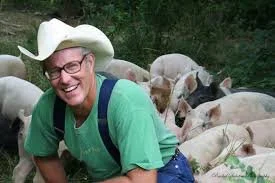
When I suggested farmers and their loyal patrons needed to circumvent the regulators it felt like inciting a revolution. That's just what Poland needs; an American rogue food libertarian telling them to kiss the EU food police goodbye. Nearly 80 percent of the EU budget is direct farm subsidies. In Poland, since joining the EU, virtually all the cottage industry food shops and butchers are gone; there is simply not a local food scene anymore. I met a farmer today who is the largest non-industrial hog producer in his whole region: he has 32 pigs.
But a movement is growing, and I'm excited to encourage these small farmers to take on the big guys and the EU tyrants. What fun.
Are labels the answer to food integrity?