SUBSIDIZING STUPID
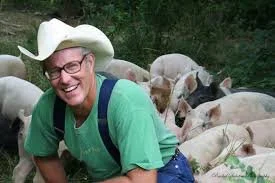
On Saturday in Milwaukee I had the distinct pleasure of engaging with U.S. Sen Ron Johnson for an hour on stage at a farm/food conference. He didn't know me from Adam, but he does now.
After haranguing for 20 minutes in a diatribe about the corruption surrounding COVID and Anthony Fauci, et. al., the hundreds killed by the jab, and ongoing governmental ineptitude, he was ready for questions. I asked him: "So when is President Trump going to apologize for Warp Speed?" I think he was taken aback for a moment, but Senators are good at landing on their feet, and he said: "I think it's a blind spot for him."
Okay, moving on. I asked about the glyphosate Executive Order and he very much vacillated on whether glyphosate is good or bad. He agreed that spraying it directly on food crops might not be a good idea, but was unsure if it actually is harmful as an herbicide. Okay.
Then he went off on bankrupt farmers, lamenting the financial difficulty they're in. I had asked a couple of farmers on a previous panel what their number one hurdle was, and the only full-timer replied "capital." But as it turns out, he's mired in litigation with Wisconsin government over his raw milk coop and the ability to stay in business. I'd say the biggest hurdle is governmental.
In a brainstorming stroke, Sen. Johnson said the next project for MAHA needs to be a "microlending" pool. That followed a questions and comment from the audience asking for additional government incentives (subsidies) for doing the right things instead of the wrong things.
I waited for a bit to pounce, and finally did. "We don't need lending; we need an outfit to navigate compliance for farmers. And we don't need incentives to do the right things; we just need to quit subsidizing stupid." The audience erupted in applause. It was a fun moment.
The most enjoyable moment was when Sen. Johnson reported about listening to a recording of a speech at a Brownstone event last fall where a farmer talked about the farmgate percentage of the retail dollar is only 8 percent. When he took a breath, I leaned over to him and said: "I was that farmer doing the talk." He laughed good-naturedly with the "gotcha."
Of course, I presented him the FOOD EMANCIPATION PROCLAMATION idea--which he also heard in that speech and affirmed that I was indeed the farmer he was referencing--and he agreed 100 percent. So I asked him when he would be able to get me in front of President Trump to pitch the idea to the big guy. He indicated he'd try, but demurred with "I can't even get an audience with him whenever I want." Fair enough. In the fulness of time is fine with me.
After he left, surrounded by what seemed like the entire law enforcement arm of the Milwaukee police department, I realized I whiffed on a critical question. I wasn't quick on my feet with this one. Toward the end of the exchange, he told everyone that the secret to getting a FOOD EMANCIPATION PROCLAMATION, or any other type of good legislation, is for the people to speak. He said you have to call your politicians and put the idea in front of them.
I'm kicking myself for not disagreeing. No, Senator, you are a leader. You don't sit there in your office waiting for the phone to ring to keep tally marks on the ideas of the day. As a leader, you are supposed to push forward on good ideas. When you hear one, run with it. All you need is exposure to a good idea; leadership says you go with what is right. If he agrees with food freedom, he should go forward with it, not wait for the phone to ring.
Congressman Thomas Massie didn't introduce the PRIME ACT because his phone lit up with constituents asking for it. No, he and Del. Frank Nicely (Kentucky legislator) brainstormed the idea on a hay wagon tour of Polyface one summer day. They literally conceived of the idea and roughed out the bill's language while sitting together on that hay ride. Massie has been pushing for it ever since and currently it's in the House-passed version of the Farm Bill and awaiting action in the Senate. True, Massie calls it "subprime" because it limits the experiment to five custom abattoirs per state, but if it passes, it will be the first time in 50 years an American farmer can legally sell a T-bone steak without asking the government's permission. I'll take it. And that, my friends, is leadership.
What does the federal government subsidize that's been helpful?